

If you grew up in the American South and feel like you would benefit from extra luck in your daily life, chances are that you have tried eating Hoppin’ John right after waking up on New Year’s Day. Or at least, you probably have heard that you should treat that day with special attention and make sure this dish appears somewhere on your table.
At first glance, nothing looks that magical about this dish. In fact, it’s vice versa — it looks just like a simple combination of peas, rice, onions, and a few other ingredients that are part of everyday meals for Asian people. Still, Southern families know that there’s a long history behind this affordable meal, and people have been eating it for generations in the hope that it will bring luck, prosperity, and perhaps some extra money for the coming year.
So, what exactly is Hoppin’ John, why is it considered lucky, and is it actually a healthy dish? In this article, we’ll answer these questions.
What is Hoppin’ John?
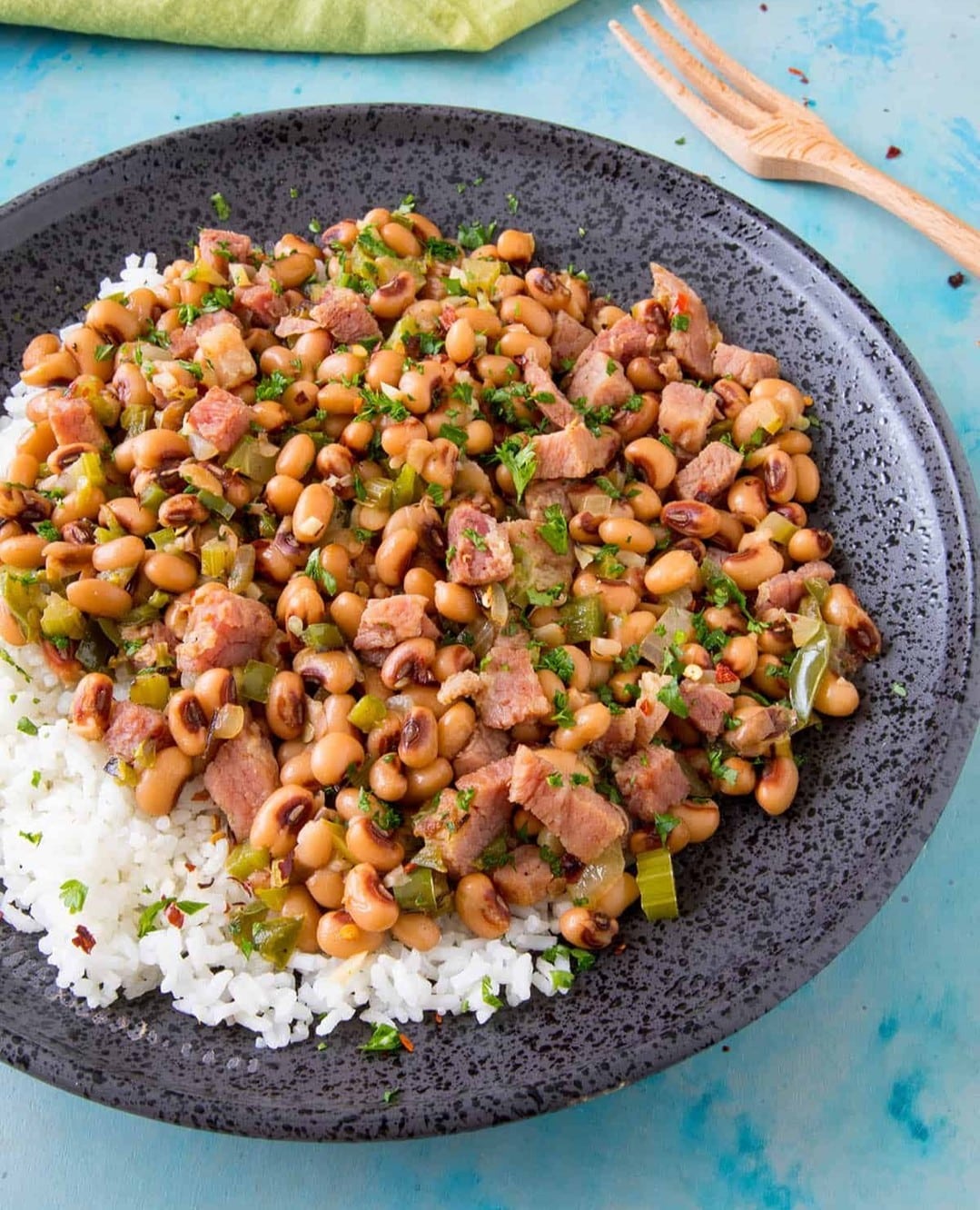
While the name “Hoppin’ John” may sound exciting, the same can’t be said about its ingredients and the way it looks. It’s a simple dish, consisting of a few ingredients that are easily found on usual days during the year. In particular, Hoppin’ John is made with black-eyed peas, rice, onions, and some type of smoky pork, such as bacon, ham hock, or salt pork.
Therefore, you may think there’s no reason to treat it as something special on New Year’s Day. But people have always enjoyed simple rituals that make luck feel a little closer. Today, that might mean looking up a WOW Vegas bonus code before trying a sweepstakes game. In the American South, it traditionally means beginning the year with a bowl of peas and rice.
Based on the traditional, older recipes, all the ingredients of this dish are cooked together in one pot. That way, rice can absorb the smoky broth and provide even more nutrients. However, modern recipes of this dish often list the peas and rice to be cooked separately. Some extra ingredients of the modernized versions also include bell peppers, celery, tomatoes, garlic, and hot sauce.
Where Did Hoppin’ John Come From?
One reason this dish deserves so much attention is its strange name. Nobody names food something that sounds like a person hopping around without having an interesting story behind it.
Unfortunately, nobody knows which story is actually true and where this unusual name came from. Still, there are some theories. For instance, some people connect it to the French phrase pois pigeons, meaning pigeon peas. There’s also an idea that children hopped around the table before eating. Based on one theory, this dish was named after a street vendor called John. And all of these explanations are interesting, but we can’t say that any of them are certainly true.
Luckily, the history of the dish itself is a bit clearer. In fact, this dish is associated with the South Carolina Lowcountry and Gullah Geechee food traditions. In general, the combination of rice and legumes is connected to West African cooking methods that were brought to the American South by enslaved Africans. Interestingly, one of the earliest published recipes appeared in Sarah Rutledge’s The Carolina Housewife in 1847, and as we mentioned above, this recipe instructed cooks to prepare the peas and rice together in one pot.
Why Is Hoppin’ John Considered Lucky?
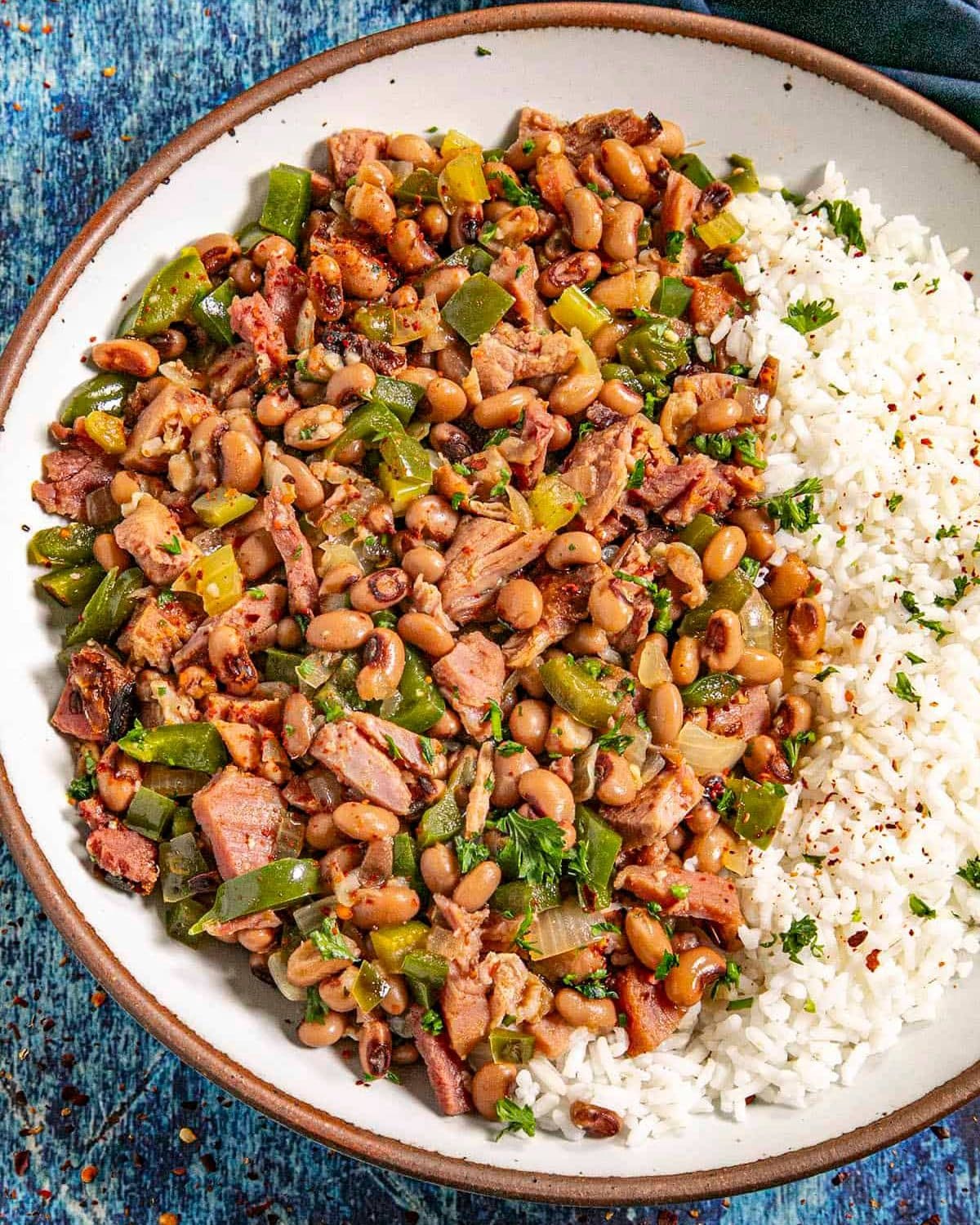
It’s true that the dish Hoppin’ John itself is very tasty and healthy, but most people don’t eat it on New Year’s Day in order to enjoy its flavor. After all, New Year's is usually associated with celebrations and “fun” food, while this one looks more like a humble everyday dinner than a festive meal.
Nevertheless, people still love to prepare it for New Year's, and there’s a reason for it. The reason it became such an important Southern tradition is that almost every part of the meal is connected to prosperity. First of all, black-eyed peas are said to represent coins, and coins, in Asian cultures, are often considered symbols of wealth. The fact that peas expand when they cook is also a symbol of growing wealth. In addition, the dish is often served with collard greens, which represent folded paper money. Furthermore, golden cornbread usually represents gold.
Thus, Hoppin’ John isn’t considered lucky just because of the tradition. Each of the ingredients that constitute this meal has some kind of connection with luck, and that’s why Southern families believe serving them together gives the new year the best possible start.
Interestingly, the leftovers are considered lucky as well. And if you eat Hoppin’ John on January 2, it’s already called “Skippin’ Jenny” because eating leftovers instead of preparing a new meal shows that you’re economical and don’t waste food, which, in turn, can attract even more prosperity.
Is Hoppin’ John Healthy?
Finally, if you’re looking for healthy meal options for celebrations or everyday life, you need to know that Hoppin’ John isn’t only connected to luck, but it’s a very healthy and nutritious meal. That’s because black-eyed peas provide plant-based protein, fiber, iron, zinc, and magnesium, while rice is full of healthy carbs for energy. However, some versions are made with plenty of bacon, salt pork, or ham hock, and in this case, it can be high in sodium and saturated fat. But if you make a few small changes, you can easily balance the dish while keeping it satisfying.





Leave a Reply